Monthly Staff Transportation in Dubai: Cost, Route Planning and Contract Checklist
Reliable staff transportation in Dubai requires more than assigning a bus and driver.
A monthly route must account for employee locations, shift times, working days, traffic, driver hours, tolls, maintenance and replacement arrangements.
Emirates Bus Rental provides corporate and staff transportation services for businesses that need regular employee travel within Dubai or between Emirates.
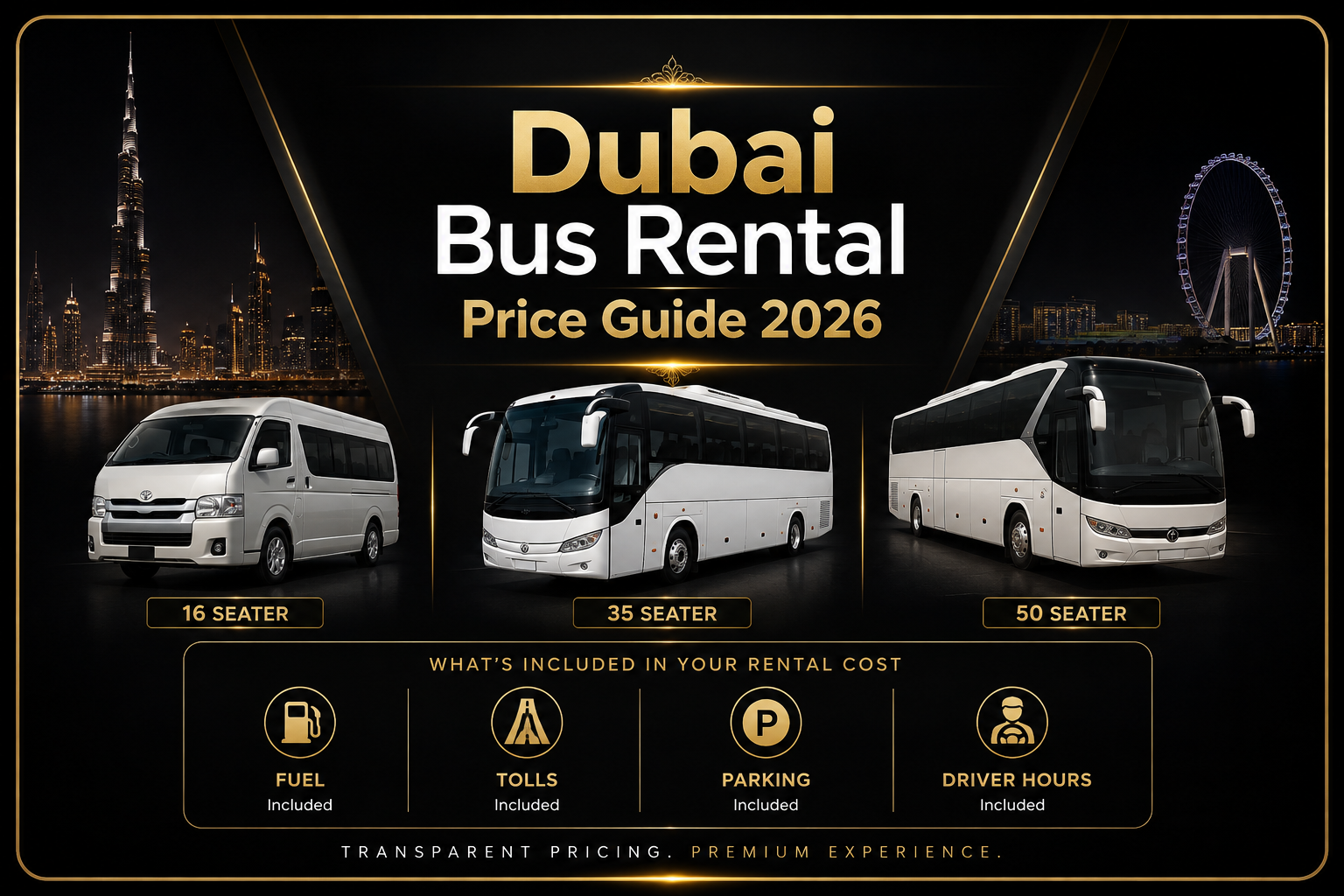
Estimated Monthly Staff Transportation Costs
The figures below are broad July 2026 market planning ranges. They are not fixed Emirates Bus Rental prices.
Vehicle category | Indicative monthly range |
12 to 16-seater vehicle | AED 5,500–10,000 |
25 to 35-seater bus | AED 7,000–13,000 |
49 to 52-seater coach | AED 12,000–22,000 |
Public rate cards show that monthly rates can vary significantly depending on vehicle size, fuel, mileage and duty hours. Some published prices exclude fuel and Salik, while higher packages may include a driver, fuel or longer daily use.
What Creates the Lower End of the Range?
A lower monthly rate may apply when the contract includes one short route, morning and evening shifts, limited daily kilometres, fewer pickup points, separately billed fuel or tolls, and standard vehicle specifications.
What Creates the Higher End?
A higher rate may apply when the contract involves long daily routes, multiple shifts, weekend operations, Sharjah-to-Dubai travel, high monthly mileage, fuel and tolls, larger or premium vehicles, or additional standby requirements.
What Affects Monthly Staff Transport Pricing?
Daily Distance
The provider must account for the entire route, including travel before the first pickup and after the final drop-off. Ask whether the contract includes a monthly mileage limit and what additional kilometres will cost.
Number of Shifts
Pricing can change when a vehicle is required for split shifts, three rotating shifts, overnight operations, weekends or public holidays rather than a standard morning and evening route.
Pickup Points
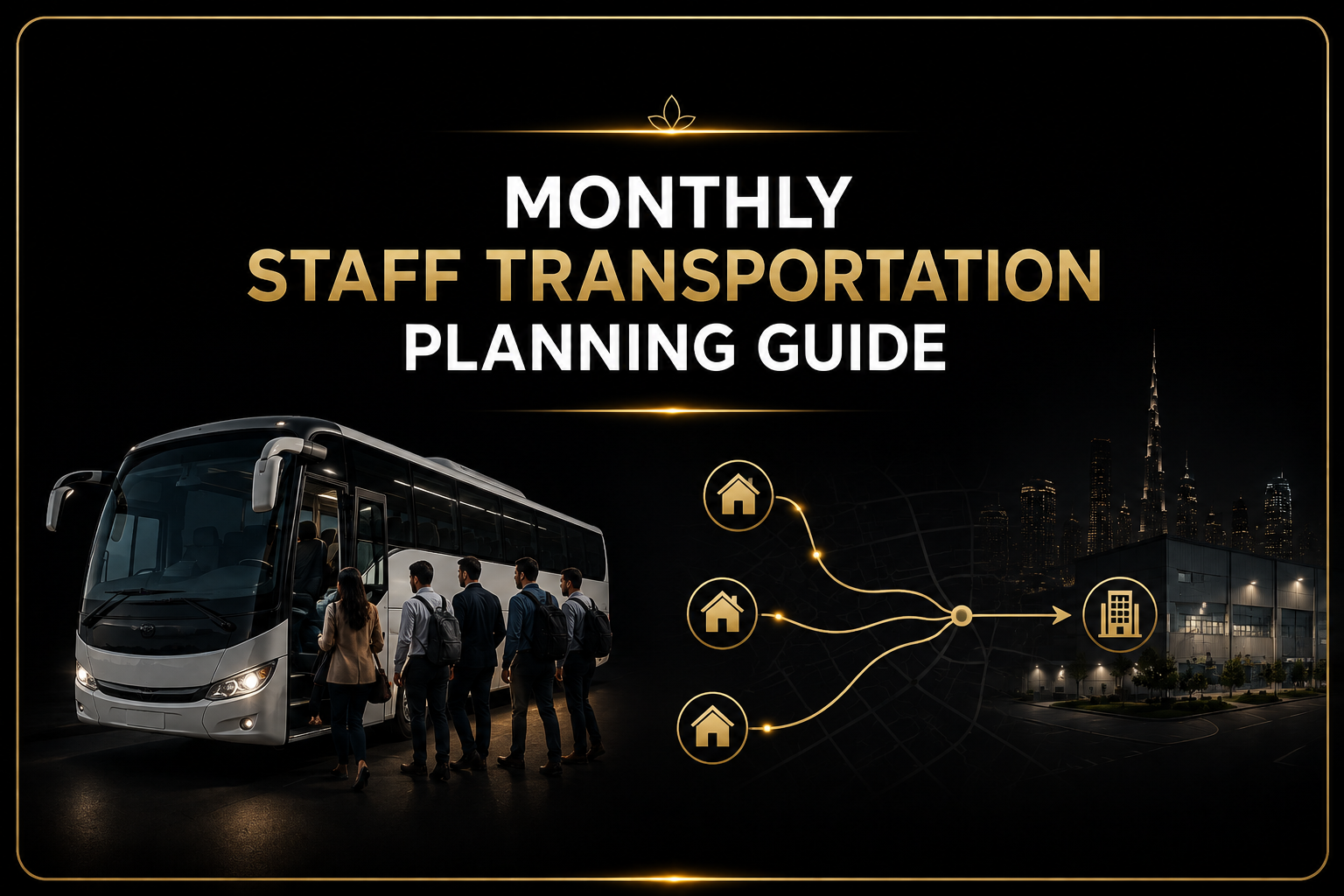
Door-to-door collection can make routes longer and less predictable. Shared pickup hubs may reduce total mileage, journey time, employee waiting, fuel use and route delays.
Employment Zones
Route planning is especially important for staff travelling to locations such as Jebel Ali Free Zone, Dubai Investment Park, Al Quoz, Business Bay, Dubai Internet City, Dubai South, Deira and Jumeirah Lakes Towers.
When planning the route, provide the exact site entrance, security process and employee reporting time.
Fuel, Tolls and Parking
Confirm whether the monthly rate includes fuel, Salik, parking, additional kilometres, Inter-Emirate charges and driver overtime.
Dubai’s Salik toll rates vary by time, and 5% VAT has applied to toll transactions since June 1, 2026.
Contract Duration
A longer agreement may provide more predictable pricing, but the contract should explain how changes to routes, shifts or employee numbers will be handled.
How to Plan an Efficient Staff Route
1. Collect Employee Location Data
Group employees by general residential area and avoid building the route using incomplete or outdated address information.
2. Create Shared Pickup Hubs
Choose pickup points that are easy to identify, safe for boarding, accessible to the bus, away from restricted parking areas and practical for several employees.
3. Work Backward From Shift Time
Employees should arrive before their reporting time rather than exactly when the shift begins. Allow time for site security, walking from the bus, attendance procedures, changing into work clothing and unexpected traffic.
4. Test the Route
A route test can identify unrealistic travel times, difficult pickup points, unsafe waiting areas, parking restrictions, better stop sequences and peak-hour delays.
5. Set Clear Employee Rules
Employees should receive the pickup location, departure time, maximum waiting period, coordinator contact, missed-pickup procedure and route-change process.
Safety, Licensing and Compliance Checks
Dubai’s RTA lists “Passengers Transport by Rented Buses” as a regulated commercial passenger transport activity. Companies should verify that the selected provider and vehicles operate under the required commercial approvals.
Before signing, ask the provider to confirm the relevant passenger transport approval, vehicle registration, insurance arrangements, driver licensing, vehicle maintenance schedule, emergency contact procedure, replacement vehicle process and incident-reporting procedure.
Do not state that a specific GPS, permit or monitoring system is included unless the provider confirms it in writing.
Monthly Contract Checklist
Vehicle Details
The agreement should identify the vehicle category, licensed passenger capacity, air-conditioning requirements, required vehicle condition and replacement vehicle standard.
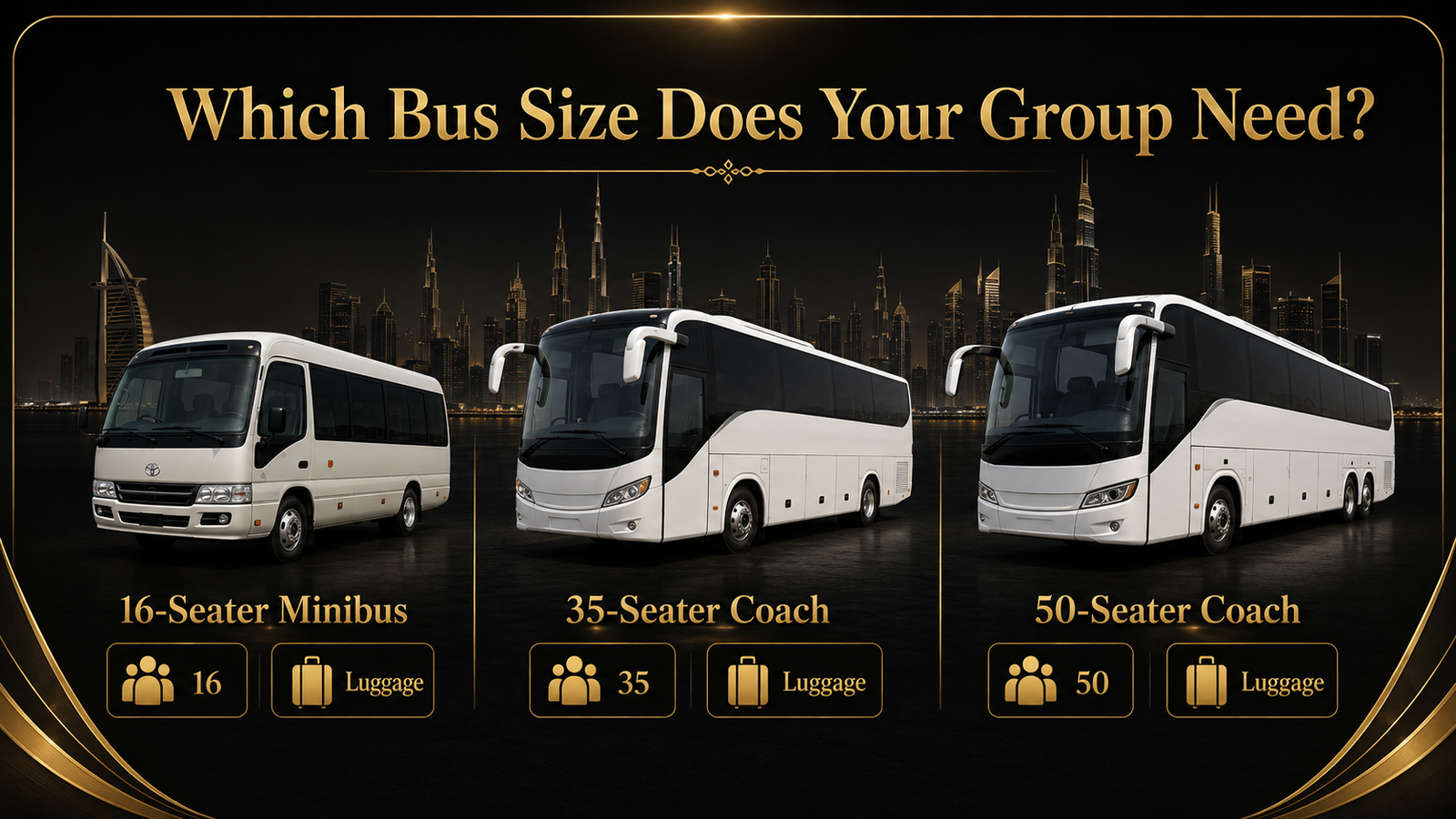
Review the available staff buses and coaches before choosing a capacity.
Route and Schedule
Attach the approved route to the contract and specify pickup hubs, departure times, workplace location, return schedule, working days, shift patterns, weekend requirements and public holiday arrangements.
Driver Arrangements
Confirm the regular driver assignment, substitute driver process, communication procedure, delay-reporting process and approval requirements for additional trips.
Fuel, Tolls and Mileage
The contract should clearly state whether fuel and Salik are included, the monthly kilometre allowance, additional kilometre rate, parking responsibility and any Inter-Emirate charges.
Maintenance and Replacement
Confirm what happens when the assigned bus is unavailable. The contract should cover replacement capacity, replacement vehicle condition, notification process, expected response procedure and responsibility for employee updates.
Service Performance
Possible service measures include on-time pickup rate, missed-trip count, vehicle cleanliness, complaint response time, breakdown frequency and monthly issue reviews.
Use measures that the provider can realistically track and report.
Invoicing and Payment Terms
Corporate buyers should confirm the monthly billing date, payment due date, VAT treatment, purchase order requirements, required invoice details, accepted payment methods, late-payment terms, billing for extra trips, deposit requirements and contract renewal process.
Ask for an itemized invoice rather than one unexplained monthly total.
Information Needed for a Route Assessment
To request an accurate route assessment, provide the employee count, residential areas, workplace address, shift start and finish times, working days, preferred pickup hubs, required vehicle capacity, contract start date, expected contract duration, weekend requirements, monthly invoice requirements and accessibility needs.
Request a custom staff transportation route assessment based on your shifts, employee locations and workplace.
Frequently Asked Questions
How much does monthly staff transportation cost in Dubai?
Publicly advertised rates range from approximately AED 5,500 for smaller or limited-use vehicles to more than AED 20,000 for larger coaches and demanding routes.
Is fuel included?
It depends on the contract. Some packages include fuel, while others exclude it or apply a mileage limit.
Can staff transport operate between Sharjah and Dubai?
Yes. The route should include peak-hour buffers, clear pickup hubs and agreed procedures for delays.
What happens if the assigned bus breaks down?
The contract should explain whether a replacement vehicle will be provided, what capacity it will have and how employees will be informed.
Can the route change during the contract?
Usually, route changes can be requested. Additional stops, distance or duty hours may affect the monthly price.
Is passenger insurance included?
Insurance arrangements should be confirmed directly with the provider. Corporate buyers should request written evidence of applicable vehicle and passenger coverage.
Can the company receive a VAT invoice?
Ask the provider to confirm its invoicing process, required company details and whether VAT is included or added separately.
Which vehicle is best for 30 employees?
A 35-seater may be suitable when attendance is stable and employees carry limited personal items. Allow extra capacity when the workforce may grow.