A desert safari is one of the most popular group outings from Dubai, and one of the easiest to get wrong on transport. The camps sit well outside the city, the timing is fixed around sunset, and the vehicles that drive on the dunes are not the ones that bring your group from the hotel. This guide explains how the transport works and what to arrange for a group.
How desert safari transport works
Most evening safaris run from mid-afternoon until around nine at night. The trip splits into two legs:
- City to the desert meeting point. A paved-road journey of roughly 45 minutes to an hour from most Dubai hotels, depending on the camp and the traffic.
- Dune driving. Done in the safari operator’s own 4×4 vehicles with their drivers. A minibus or coach does not go onto the sand.
For a small party the safari operator often collects guests in the 4x4s. For a larger group that becomes a long convoy of cars with staggered pickups, which is why organisers usually book one bus to the meeting point and let the operator take over from there.
Why groups book their own bus
- One pickup time. Everyone leaves the hotel or office together instead of waiting for separate cars.
- One return time. After dinner the group leaves together, which matters when people are tired and it is dark.
- Space. Bags, camera gear and a change of clothes travel in the luggage hold.
- Not everyone does the dune drive. Guests who skip it, such as young children or anyone with a back problem, can go straight to the camp by road where the operator allows it.
Timing a group departure
Work backwards from sunset. Operators normally want guests at the meeting point with time to spare before the dune drive, so a mid-afternoon departure from the city is typical, and earlier in winter when the sun sets sooner. Add a buffer if you are collecting from more than one hotel, and remember that afternoon traffic leaving Dubai builds quickly.
For the return, agree a departure time from the camp in advance. Shows and dinner tend to finish at a set time, and a bus that is ready when the group walks out saves a long wait in the car park.
Choosing the vehicle
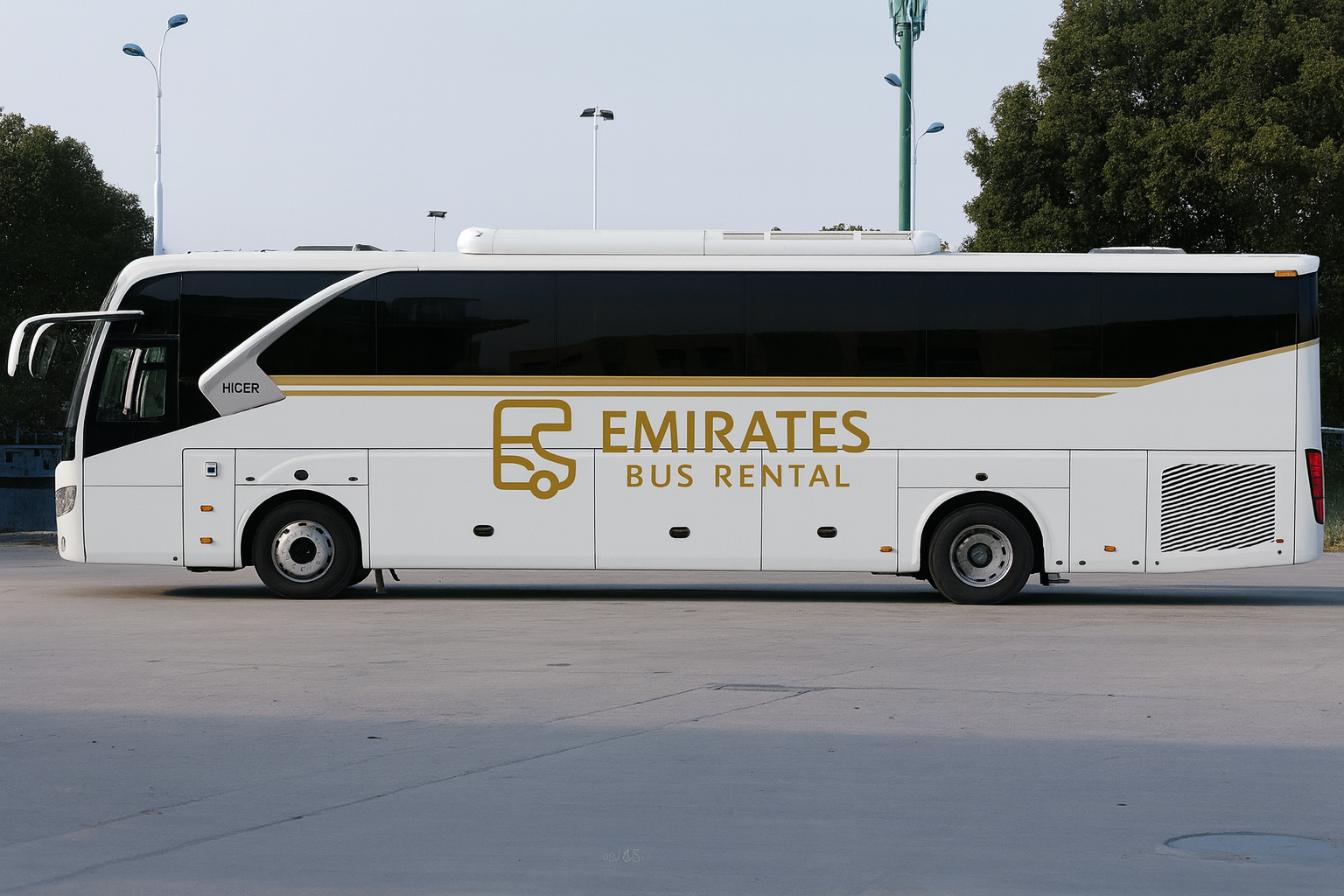
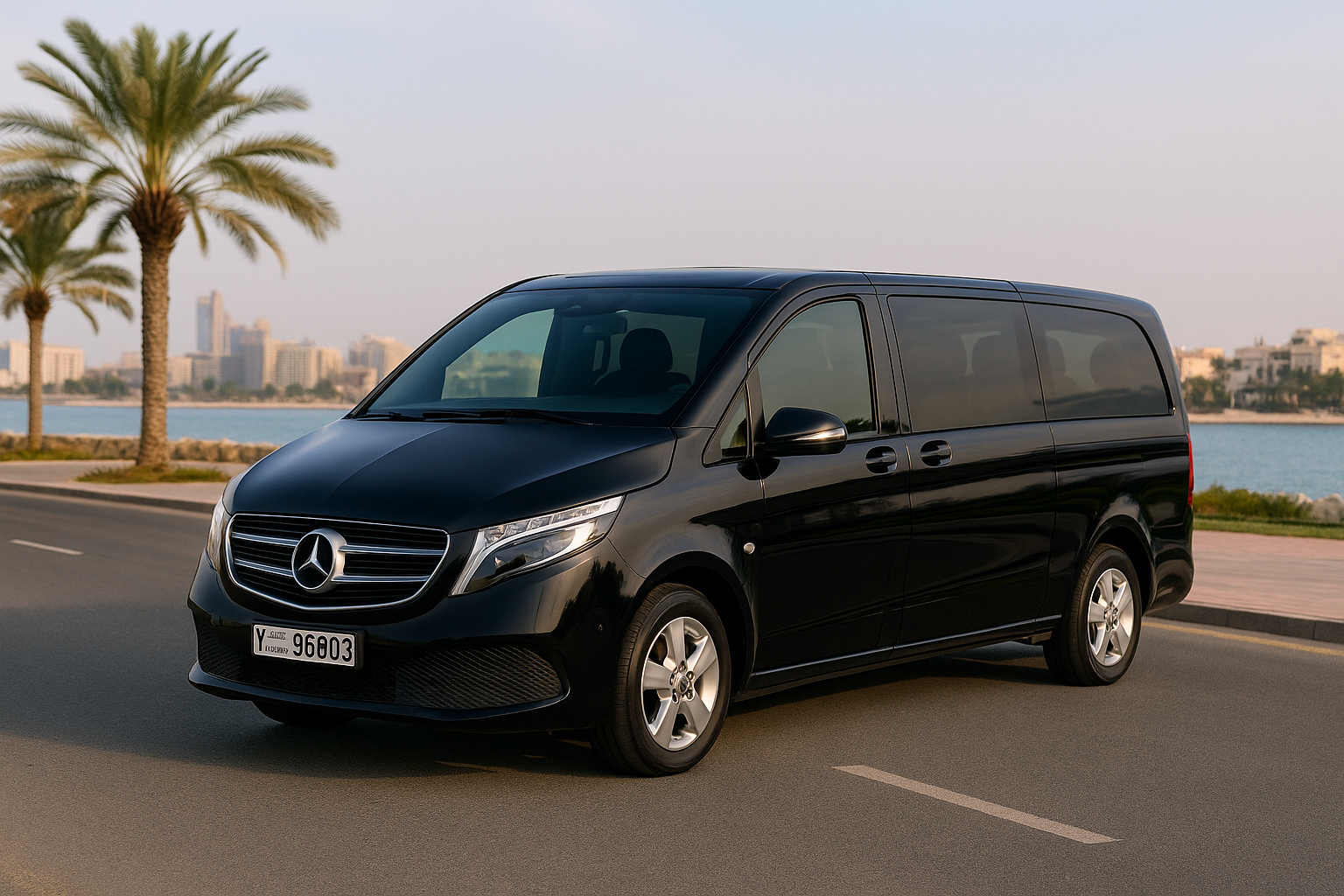
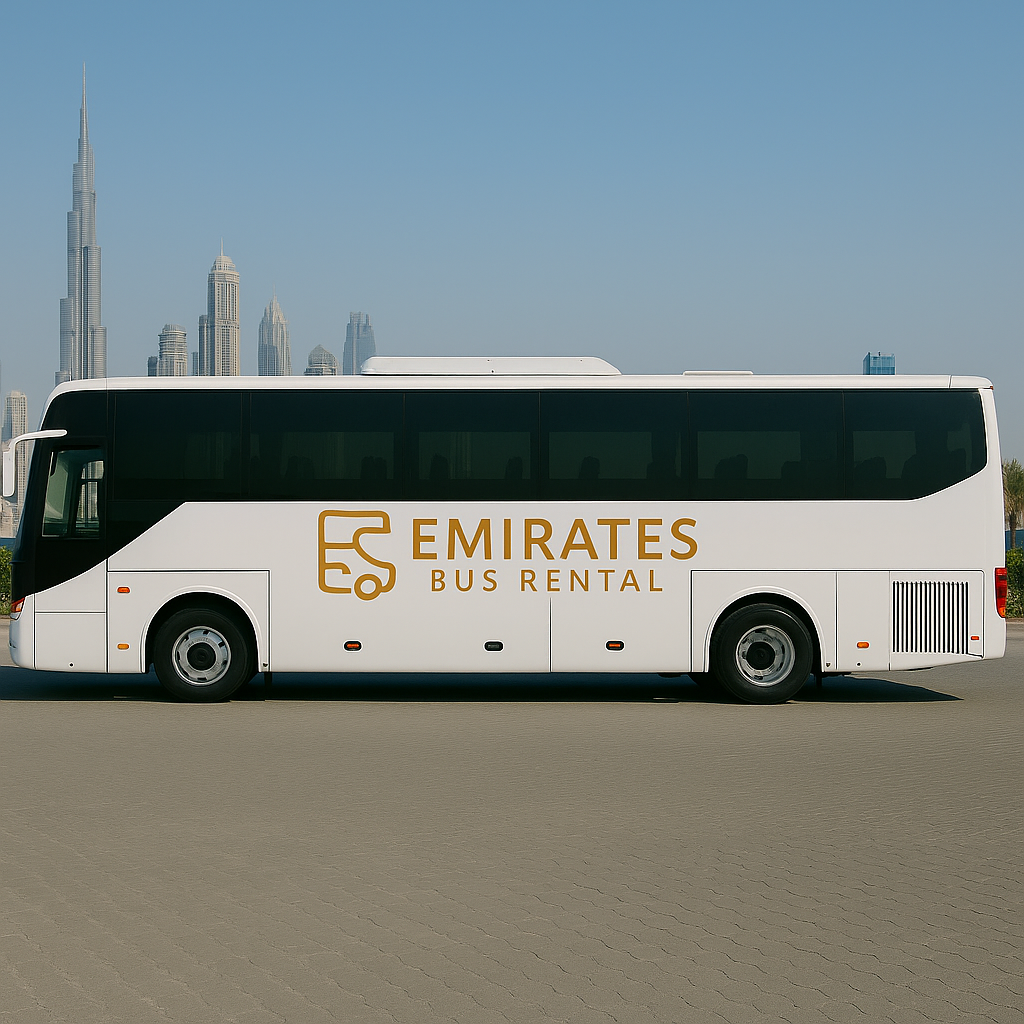
Match the bus to the headcount and to the access road. Our fleet runs from 8-seater minivans to 52-seater coaches. Ask the safari operator whether their meeting point or camp car park takes a full-size coach; if it does not, two smaller vehicles may be the better choice. Our guide to choosing between 16, 35 and 50-seater buses covers the trade-offs.
What to confirm before you book
- The exact meeting point or camp location, as a map pin
- The arrival time the operator expects
- Whether a coach can reach and park at that point
- How many guests are doing the dune drive and how many are going by road
- The time the evening programme ends
- Pickup points and numbers at each hotel or office
Common questions
Can the bus drive into the desert?
No. Buses stay on paved roads and car parks. The dune drive is done in the safari operator’s 4×4 vehicles.
Does the bus wait for us?
With a daily or evening hire the vehicle can stay and bring the group back. Tell us the expected finish time when you ask for a quote.
Do you sell the safari itself?
This guide covers the transport. Tell us what you have booked, or what you still need, when you get in touch.
Planning a group safari? See our tours and excursions service or request a free quote with your date, group size and pickup points.